

Blog
Diesel Parts Warranty Review for Working Trucks

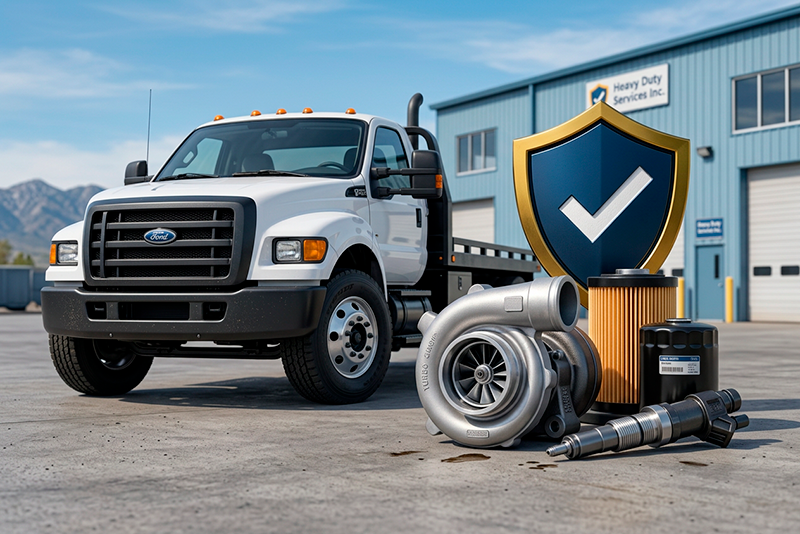
A failed injector, turbo, or high-pressure fuel pump does not wait for a convenient day in the shop. It puts a truck, jobsite machine, route, or customer deadline at risk. That is why a diesel parts warranty review should focus on more than the number of months printed on the box. The real question is whether the supplier stands behind a correctly matched, properly tested part when your engine needs to get back to work.
For truck owners, fleets, and repair shops, warranty coverage is part of the repair decision. A low-priced component can become the expensive option if it fails early, arrives incorrectly configured, or requires a long back-and-forth before a claim is reviewed. A strong warranty program starts with quality control, clear terms, accurate application support, and documentation that gives both the buyer and supplier a fair path to resolve a legitimate failure.
What a Diesel Parts Warranty Actually Covers
A warranty is protection against defects in materials or workmanship during a defined coverage period. It is not an all-purpose repair policy for every problem that appears after installation. That distinction matters most on modern diesel fuel systems, where contamination, incorrect installation, wiring faults, or unresolved engine problems can damage even a new or remanufactured component.
American Diesel Parts backs eligible parts with a 12-month limited warranty. The word “limited” is not fine-print language to ignore. It means coverage is governed by specific terms, conditions, and claim requirements. Buyers should review the warranty policy for the exact part being purchased, especially when installing high-value components such as common-rail injectors, HEUI injectors, turbochargers, CP3 pumps, CP4 pumps, electronic actuators, and EGR coolers.
The practical value of a 12-month limited warranty is straightforward: it gives the buyer a defined period of protection while the part proves itself in actual service. For a repair shop, that protection helps control comeback risk. For an owner-operator, it adds confidence that a major repair expense is supported by a supplier that understands diesel systems.
Diesel Parts Warranty Review: What Separates Good Coverage
The strongest warranty is supported long before a claim ever happens. A remanufactured diesel part must be rebuilt to a standard that makes coverage meaningful. That includes inspection, cleaning, replacement of wear components where required, calibration, final testing, and application-specific preparation.
Take diesel injectors as an example. An injector can physically fit the cylinder head and still be wrong for the engine calibration. Trim code programming and proper testing help ensure a remanufactured injector is ready for the application instead of being a gamble at startup. On electronic fuel systems, that level of preparation can mean the difference between a clean repair and repeated diagnostic time.
The same logic applies to turbos and fuel pumps. A turbo needs the correct actuator, vane setup, oil supply conditions, and installation procedure. A fuel pump needs clean fuel, proper system flushing, and verification that the underlying failure did not send metal through the rails, lines, injectors, and tank. No warranty can reasonably cover a replacement part that is immediately exposed to the same contamination that destroyed the original unit.
A useful diesel parts warranty review looks at these factors together:
- Is the component tested and prepared for the exact engine application?
- Are installation instructions and technical support available when the job raises questions?
- Does the supplier clearly explain the coverage period and claim process?
- Is there a practical core-return process for remanufactured components?
- Can the supplier confirm inventory, part numbers, and compatibility before the order ships?
Those details matter because a warranty should support uptime, not create another layer of delay after the repair has already gone sideways.
Why Installation Records Matter in a Warranty Claim
Good documentation protects everyone. If a part develops a problem, the supplier needs enough information to determine whether the issue is a manufacturing defect, an installation concern, an engine-system failure, or a separate issue that only looks like a failed part.
Keep the original invoice, vehicle identification information, engine serial number when available, labor records, diagnostic codes, and installation notes. For fuel-system repairs, retain details on fuel quality, filter replacement, tank cleaning, rail and line flushing, and contamination findings. For turbo repairs, document oil feed and drain inspection, air intake condition, charge-air-cooler cleaning, and any related fault codes.
This is not unnecessary paperwork. It is evidence that the repair was performed correctly and that the replacement part was given a proper operating environment. It also helps the technician avoid chasing the wrong failure. A low-boost code after a turbo replacement may be a charge-air leak. A rough-running engine after injector installation may point to a wiring issue, compression concern, incorrect coding, or contaminated fuel. Throwing another part at the truck without testing wastes time and can complicate a valid warranty evaluation.
The Core Return Is Part of the Transaction
Many remanufactured diesel components are sold with a core charge. The core is the used, rebuildable component returned to the supplier after the replacement part is installed. It supports the remanufacturing cycle, keeps cost more manageable, and helps maintain a supply of housings and hard parts for future repairs.
A core return is not simply a box to ship back whenever convenient. Follow the return instructions, use the provided shipping label when applicable, package the core securely, and return it within the required timeframe. Drain fluids as instructed and protect vulnerable areas such as injector tips, fuel-pump fittings, actuators, and electrical connectors from shipping damage.
Core condition can affect the credit amount. A damaged, incomplete, non-matching, or non-rebuildable core may not qualify for full credit. Before ordering, confirm the core requirements for that specific component. This is especially important with injectors, pumps, and turbochargers, where several similar-looking versions may exist across Cummins, Power Stroke, Duramax, Detroit, Caterpillar, International, Paccar, Volvo, and Mercedes-Benz and other platforms.
Where Warranty Protection Stops
Experienced diesel technicians know that parts fail for reasons. A warranty generally does not replace damage caused by conditions outside the part itself. Contaminated fuel, improper installation, lack of lubrication, incorrect tuning, overheating, electrical damage, unauthorized modifications, or continued operation after warning signs can all create failures that are not manufacturing defects.
Consider a CP4 fuel pump failure. If metallic debris has moved through the fuel system, replacing only the pump is rarely enough. The proper repair may require injectors, rails, lines, filters, tank cleaning, and a contamination kit, depending on the application and level of damage. Installing a replacement pump into a contaminated system risks an immediate repeat failure. That is not a warranty problem. It is an incomplete repair.
There is a trade-off here. Replacing the full system costs more upfront, but it can prevent a far more expensive repeat repair. For fleet managers, that calculation should include downtime, towing, missed loads, technician hours, and customer commitments, not just the price of the initial part.
How to Buy With Fewer Warranty Problems
Start with accurate identification. Provide the year, make, model, engine, VIN when needed, part number from the old component, and any relevant calibration or trim information. Do not order solely by appearance. Diesel platforms often changed part designs, connectors, actuators, and fuel-system configurations within the same model year.
Next, diagnose before ordering. Pull codes, inspect supporting systems, check wiring and connectors, verify fuel pressure or boost data where applicable, and identify what caused the original component to fail. If the diagnosis is uncertain, direct technical support before installation is worth more than a fast guess.
Then install the part according to the correct procedure. Use clean tools and fluids, replace required seals and hardware, follow torque specifications, complete programming when applicable, and perform required priming, relearn, or calibration steps. A quality part deserves a quality installation.
Buy the Part and the Support Behind It
Warranty protection is strongest when it is paired with correct fitment, tested components, disciplined installation, and a supplier willing to talk through the repair. For a working diesel truck, that is the real value: fewer surprises, faster troubleshooting, and a clear path forward if a problem appears.
Before placing the order, confirm the application, ask what the warranty requires, and address the root cause of the original failure. Leave diesel to the specialists, and put the truck back on the road with a repair you can stand behind.