

Blog
Remanufactured Versus New Injectors Explained

A diesel injector problem rarely shows up at a convenient time. It shows up as a hard start before a route, white smoke in the yard, a rough idle at the shop, or a truck that has lost the pulling power it needs to earn. When replacement time comes, the remanufactured versus new injectors decision affects more than the invoice. It affects repair quality, downtime, fuel system reliability, and the next service call.
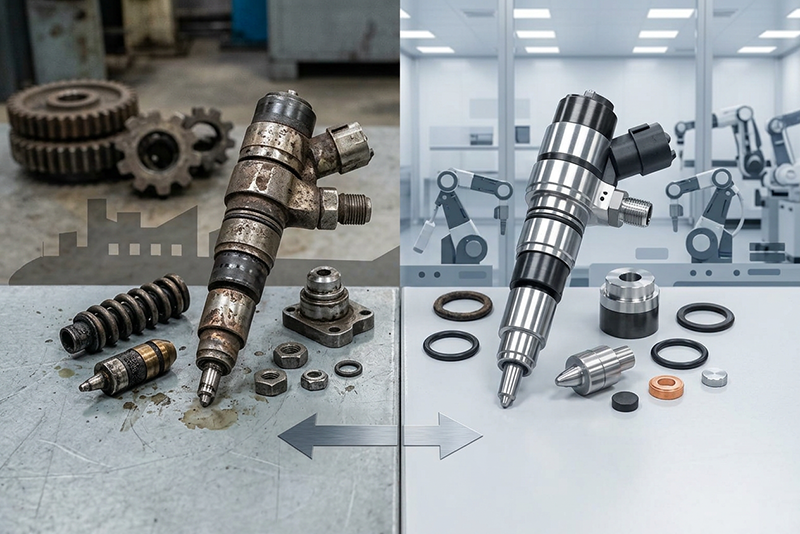
For many diesel applications, a properly remanufactured injector is the best value. For others, a new injector is the right call. The difference is not simply old versus new. It comes down to injector design, the quality of the remanufacturing process, availability, programming requirements, the condition of the fuel system, and how much risk your operation can accept.
What You Are Actually Buying
A new injector is a newly manufactured component built to the original design specification or an approved replacement specification. Depending on the engine platform, it may be OEM, OE supplier, or premium aftermarket. It has not been in service before, and it typically arrives with all internal components new.
A remanufactured injector begins with a rebuildable core. That core is completely disassembled, cleaned, inspected, and measured. Worn or failed internal parts are replaced, then the injector is reassembled and tested to confirm it meets operating specifications. On electronically controlled common-rail systems, the work can also include generating or programming the correct trim code or calibration code.
That last point matters. An injector is not just a nozzle that sprays fuel. It is a precision fuel-metering component. On engines from Cummins, Detroit, Caterpillar, Ford Power Stroke, Duramax, International, Paccar, Volvo, and Mercedes-Benz, correct delivery volume, timing response, leak rate, and electrical performance all matter. A cheap injector that physically fits but does not perform correctly can create a much more expensive repair.
Remanufactured Versus New Injectors: The Real Differences
The largest advantage of remanufactured injectors is cost. A quality reman unit commonly costs less than a comparable new injector, which makes a meaningful difference when replacing a full set on a heavy-duty engine. For fleet maintenance managers and independent shops, that cost difference can free up budget for the fuel filters, lines, sealing hardware, cleaning work, and labor needed to complete the job correctly.
A remanufactured injector also puts usable material back into service instead of scrapping a repairable body. That is a practical benefit, but it should never be the primary reason to buy one. The primary reason is value – proven injector components rebuilt and tested to perform in a demanding diesel application.
New injectors offer a different kind of confidence. Since every component begins new, they can be the preferred choice when a particular application has a limited core supply, a difficult-to-remanufacture design, or a history of inconsistent rebuild quality in the market. They may also be the better option when the vehicle is under a manufacturer warranty that requires specific OE parts.
Neither option automatically wins. A new injector from an unknown source can be a poor purchase. A professionally remanufactured injector with advanced test results, proper calibration, and warranty coverage can be a stronger repair part than a bargain-priced new alternative.
Quality Comes Down to the Remanufacturing Process
The word “rebuilt” is used loosely in the diesel parts market. Some suppliers use it to describe an injector that has received basic cleaning and a few replacement pieces. That is not the same as a controlled remanufacturing process.
A dependable reman injector should be evaluated for body damage, corrosion, thread condition, electrical faults, internal wear, nozzle condition, and sealing surfaces. Components that do not meet specification should be replaced, not reused because they look acceptable. The finished injector should be tested on equipment designed for its fuel system type, verifying critical performance measurements rather than relying on a simple bench check.
For common-rail injectors, calibration is especially important. Small variations in fuel delivery can affect combustion balance, cylinder contribution, emissions equipment performance, fuel economy, and engine noise. Where the application requires it, the injector must have the correct trim code or programming information entered into the engine control module after installation. Skipping that step can leave a good injector performing like a bad one.
This is why part number accuracy matters. Do not order solely by engine displacement, truck model year, or visual similarity. Verify the engine serial number, injector part number, emissions configuration, and, when applicable, the original calibration code. A knowledgeable diesel parts supplier should help confirm fitment before the part leaves the warehouse.
When Remanufactured Injectors Make the Most Sense
Remanufactured injectors are often the practical answer for working trucks that need reliable repairs without the premium cost of all-new components. They are a strong option when the remanufacturer has a documented testing process, the injectors are correctly programmed, and warranty support is available.
They make particular sense for a fleet replacing multiple injectors on a high-mileage engine, an owner repairing an older truck with a solid engine, or a shop handling a customer repair where cost control matters. The savings can support the rest of the job, including new injector seals, hold-down hardware when required, fuel filtration, and fuel system cleaning.
Core returns are part of the equation. Your removed injectors may have rebuildable value, even if they are no longer fit for service. Keep the cores complete, protect them from shipping damage, and return them according to the supplier’s instructions. A damaged, incomplete, or non-rebuildable core can reduce or eliminate the expected core credit.
When New Injectors Are Worth the Extra Cost
New injectors may be the better choice when the truck has a long service life ahead and the repair budget supports OE or premium new components. They are also worth considering for severe-duty applications where a failure would be exceptionally disruptive, such as equipment supporting a time-sensitive construction project, dedicated long-haul units, or specialized commercial vehicles.
Choose new when the application calls for it, not because “new” sounds safer. A new injector does not correct contaminated fuel, a failing lift pump, worn high-pressure fuel components, or improper installation. If the root cause remains in the system, the replacement injector can fail early regardless of which option you chose.
Availability can also decide the issue. Some engines have strong reman support and readily available cores. Others may have limited reman options but good access to new units. When a truck is parked and freight is waiting, the best injector is the correct, tested unit that can be installed properly without delay.
Protect the Injector Investment Before Installation
Injector replacement should never be treated as a parts-swap-only repair. Before installation, determine why the original injector failed. Check fuel quality, water contamination, filtration intervals, tank debris, low-pressure supply issues, rail pressure concerns, wiring faults, and return-flow problems. On systems affected by metal contamination, replacing injectors alone is not enough. The high-pressure pump, rails, lines, tank, and related components may require cleaning or replacement based on the failure severity. En estos casos, un contamination kit puede ser la solución más segura.
Use clean fuel, clean tools, and correct installation procedures. Follow torque specifications, replace single-use seals and connectors where required, and keep dirt out of every open fuel connection. Even a small amount of contamination can damage precision injector components.
After installation, complete any required coding or relearn procedure, clear faults, verify rail pressure, inspect for leaks, and road-test the truck under conditions that reflect its normal workload. A smooth idle in the service bay is not the final test for a truck that pulls weight all day.
Make the Choice Based on the Repair, Not the Label
The right decision is based on part quality and repair conditions. A tested, properly calibrated remanufactured injector backed by a 12-month limited warranty can deliver dependable performance and serious savings. A quality new injector can be the right investment for certain applications, warranty requirements, or operating demands.
American Diesel Parts supplies diesel injectors for the engines that keep commercial trucks, work pickups, and equipment moving, with technical support to help match the correct part to the job. Bring the engine details, injector numbers, and failure symptoms to the conversation. The more accurately the repair starts, the better chance your truck has of leaving the bay ready to work instead of coming back for the same problem.